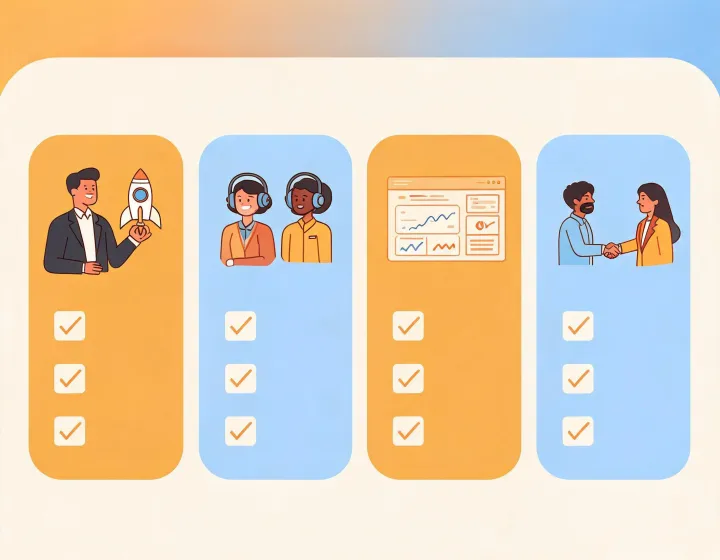
Founder-led discovery
Test a narrow segment without turning exploration into a mass campaign. Define firmographic and technographic criteria, collect two public signals, and review a small set. A founder should compare accepted targets, research time, provider cost, and meaningful replies—not claim market validation from connection volume. Keep external action manual while the ICP changes.
SDR team research
Give representatives an evidence checklist before drafting. Confirm account fit, role, source recency, suppression, and suitable context. Managers set daily pacing, working hours, message limits, escalation, and stop conditions. Profile activity does not guarantee intent, and personalization does not guarantee replies. Review current platform rules before using automation.
RevOps orchestration
Map sources, agent runtime, CRM, engagement tools, credentials, exports, logs, retention, and deletion. Prefer documented APIs when available; browser automation can be fragile and harder to govern. Separate research, drafting, approval, and sending permissions. Measure overrides, opt-outs, delivery, and account incidents alongside productivity.
Agency delivery
Keep every client’s ICP, credentials, suppression, templates, evidence, and reports isolated. Document client authorization, applicable regions, approved channels, and who makes the send decision. Do not describe automation as unlimited, risk-free, or inherently compliant. Reports should distinguish researched, approved, sent, delivered, replied, and opted-out states.